


















Skip to content

October 2026
Trick or Treatment


Table of Contents

The Doctors Company, the nation’s largest physician-owned medical malpractice insurer, announced that it has completed the acquisition of ProAssurance, a specialty insurer with broad expertise in medical liability, products liability for medical technology and life sciences companies, and workers’ compensation insurance.
Read more.

About Our Issue

Tricks, Treats, and Spooky Surprises

Halloween is the season for things that go bump in the night, unexpected frights, and the occasional skeleton in the closet. In medical professional liability, however, the most unsettling surprises don’t always come with a warning—or a costume.

In this special Trick or Treatment issue, we’re exploring the risks that can catch healthcare practitioners off guard, from operating room fires and emotionally charged courtroom evidence to phantom damages, medical record management missteps, and the unexpected liability questions that arise in specialized healthcare settings. Some challenges are hiding in plain sight. Others emerge only when a claim reaches the courtroom or a practice faces an unexpected crisis.

For our agents and brokers, recognizing these exposures is about more than avoiding a fright. It’s about helping your clients understand their risks, make informed decisions, and prepare for the unexpected. Whether the concern involves a seemingly routine procedure, a practice’s changing operations, or the evidence that ultimately shapes a jury’s verdict, a little foresight can go a long way toward preventing a frightening surprise.

Of course, not every nightmare scenario needs to be taken too seriously. This issue also invites you to consider how your clients’ practices would fare in a zombie apocalypse—and what the undead might teach us about emergency preparedness, communication, and continuity planning. (Spoiler alert: tongue depressors probably aren’t your best line of defense.)

So join us in separating the tricks from the treatments that make a difference. You may discover a few risks you hadn’t considered, some valuable lessons to share with your clients, and perhaps a reason or two to keep the lights on.

After all, a little Halloween fright is fun. An unexpected liability claim? Not so much.

WebBannersOct26-1

Surgical Fires: A Preventable Fright

Intra-operative fires continue to be a risk in operating rooms despite the cessation of the use of flammable anesthetic agents. Prevention of intra-operative fires requires understanding the risks and effective communication between surgical, nursing, and anesthesia staffs.

When the three elements of the “fire triad” or “fire triangle” (an oxidizer, an ignition source, and fuel) are present in the surgical field, the risk of an intra-operative fire is extremely high.

The following cases illustrate the challenges faced when defending burn injuries resulting from intra-operative fires.

  • A patient was undergoing surgical skin lesion removal from her chest. The PPM-insured anesthesiologist was administering monitored anesthesia care (MAC) with sedation and 100% oxygen at 10 L/min. The surgical prep solution was part iodine and part alcohol. The surgeon was using an electrocautery device to remove the lesions. A popping sound was heard and the drapes around the patient’s face and the patient’s face caught on fire. The surgical care team reacted quickly and extinguished the fire. The patient suffered partial and full-thickness burns to her entire face and scalp. The case settled prior to trial.
  • Another patient presented for right carotid endarterectomy. The anesthesiologist administered a right cervical block with 5 L/min oxygen via mask ventilation. The ends of the surgical drapes had been placed on the IV poles to permit ventilation under the drapes to allow the oxygen to dissipate. The surgical field was prepped by the nurse with an alcohol-based prep solution. While the surgeon was using an electrocautery device for hemostasis, a popping noise was heard and the surgical drapes and the patient’s face caught on fire. The case settled prior to trial.
  • In another example, a patient underwent repair of the left inguinal hernia and excision of the 2 cm sebaceous cyst of the right neck under local anesthesia with supplemental oxygen at 3 L/min via nasal cannula. At the end of the case when the surgeon was closing the wound in the neck and cauterizing the bleeders, the electrocautery tip produced an explosion followed by a large flame. Water was poured on the patient’s face and the fire was rapidly extinguished. The patient suffered first and second degree burns on her face, left ear, and right shoulder. The patient was treated with silver sulfadiazine cream for her burns and was seen by a plastic surgeon. The patient’s burns responded well to treatment, and she was discharged with most of the burns nearly healed. Following a two-week trial, the jury returned a plaintiff verdict.

Intra-operative fires are potentially devastating, preventable complications. Each member of the surgical care team has responsibility to minimize or eliminate the risk of intra-operative fire. Hospitals and other healthcare facilities should have operating room fire safety policies and protocols to educate all members of the surgical care team about intra-operative fire prevention and management.

This article is condensed for ProVisions from the original that appeared in Issue 26 of the PPM Risk Management newsletter Anesthesia & the Law. Share with your clients the full article containing risk management advice for preventing and managing intra-operative fires and the challenges of defending these preventable claims in the courtroom.

BrianJThomaswTITLE


WebBannersOct26-2

The Weight of Shocking Evidence

Understanding probative value, unfair prejudice, and the role of emotion in trials 

Medical malpractice trials ask jurors to make difficult judgments about complicated medical events. Was the standard of care met? Was the treatment appropriate under the circumstances? Did the care cause the patient's injury? What do the medical records, testimony, and expert opinions establish?

Those questions are often answered through evidence that is technical and methodical: medical records, imaging, laboratory results, timelines, and expert testimony.

But sometimes one piece of evidence can change the way a jury experiences the entire case. A photograph. A video. A description of an injury. A particularly emotional piece of testimony.

Such evidence may be entirely relevant to the case. It may help establish the severity of an injury or explain what a patient experienced. But its emotional force can also affect how jurors perceive the evidence that follows.

That tension is particularly important in MPL, where the underlying facts may involve serious injury, disability, or death. The challenge is not simply determining whether evidence is relevant. It is understanding what the evidence actually proves—and whether its emotional impact could cause it to be considered for reasons beyond its legitimate evidentiary value.

When Evidence Carries Emotional Weight

Consider a courtroom midway through a medical malpractice trial. The medical issues are technical. Experts have discussed anatomy, laboratory values, and treatment decisions. Counsel have spent considerable time explaining the clinical reasoning behind the care at issue.

Then plaintiff’s counsel introduces a photograph. It is not an imaging study or a page from the medical record. It is an ordinary household bucket filled with what appears to be dark red liquid.

The plaintiff offers the photograph as evidence that, after treatment, the patient experienced a severe reaction at home and vomited enough blood to fill the bucket.

The image is difficult to ignore. Jurors who had been following a technical discussion suddenly have something visceral in front of them. The defense still has the same clinical evidence, but the context has changed.

Relevance and Rule 403

The practical concern with shocking evidence is that its ability to command attention may be greater than its ability to establish a disputed fact. The Federal Rules of Evidence govern the admission or exclusion of evidence in U.S. court proceedings. Many states have adopted rules modeled on the Federal Rules of Evidence, but the wording and case law vary by jurisdiction:

  • Rule 401 defines relevant evidence: Evidence is relevant if (a) it has any tendency to make a fact more or less probable than it would be without the evidence; and (b) the fact is of consequence in determining the action.
  • Rule 402 generally provides that relevant evidence is admissible unless another rule, statute, or constitutional provision provides otherwise.
  • Rule 403 provides one of those principal limitations: The court may exclude relevant evidence if its probative value is substantially outweighed by a danger of unfair prejudice, confusing the issues, misleading the jury, undue delay, wasting time, or needlessly presenting cumulative evidence.

Three concepts are particularly important in applying Rule 403:

  • Relevance asks whether the evidence tends to establish a fact that matters to the case.
  • Probative value concerns how much the evidence helps prove that fact.
  • Unfair prejudice is concerned with the danger that relevant evidence will lead the jury to decide a case on an improper basis.

The distinction between prejudice and unfair prejudice is important. Almost all evidence offered in litigation is prejudicial in that evidence that helps one side generally hurts the other. That is not what Rule 403 is designed to prevent.

The concern is unfair prejudice. It involves evidence where the emotional charge is out of proportion to what it actually proves. The notes to Rule 403 expressly recognize the possibility that relevant evidence can induce a decision based on emotion rather than the issues the jury is supposed to resolve.

This does not mean that graphic photos, emotional testimony, or evidence of serious injury should be excluded automatically. In a medical malpractice case, evidence concerning the patient’s condition, although graphic, may offer legitimate probative value in that it is essential to understanding what happened and determining damages.

“Rule 403 arguments are often made in pretrial motions, and I’ve seen judges wrestle with these rulings because it really is a balancing act,” said Barbara Hunyady, ProAssurance Midwest and Northeast Regional Risk Manager. “Judges are hesitant to exclude relevant evidence, but they also have to decide when that evidence crosses the line and becomes unfairly prejudicial.”

The court must weigh the evidence’s legitimate ability to prove a fact against the potential harm from admitting it. If an injury is already established and an additional photograph contributes relatively little factual information while adding substantial emotional force, that photo could present unfair prejudice.

The distinction is important because a defense argument that an exhibit is shocking is not necessarily an argument that it should be excluded. The more useful questions are:

  • What fact does the evidence actually help establish?
  • How strong is that evidentiary value?
  • Is that fact disputed?
  • Is the evidence properly connected to the facts of the case?
  • Is substantially similar information available through less prejudicial evidence?
  • Could the evidence confuse or mislead the jury?
  • Does its emotional impact create a meaningful risk that jurors will use it for an improper purpose?

These questions are ultimately matters for the court to address and highly dependent on the circumstances of an individual case.

What Research Tells Us About Emotion and Evidence

The concern about shocking evidence is not merely theoretical. A research study found that “gruesome” photographs (meaning in this context gory, bloody, or violent photographs of injury or death to a human body) had a small but statistically significant effect on legal decisions, increasing guilty or liable verdicts or punishments. The effect was considerably larger when gruesome photographs were compared with no photographs at all than when they were compared with neutral photographs.

As technology expands how evidence can be captured and presented (e.g., body-camera footage, cell phone recordings, and AI-generated recreations), courts face new challenges in managing evidence that can evoke powerful emotional responses.

Rather than telling jurors to set emotions aside, courts can address the emotional impact of evidence itself and offer approaches to mitigating emotional effects. These include carefully constructed jury instructions as well as presenting gruesome photographs in black and white rather than color to help reduce the emotional response while preserving the information the evidence conveys.

The Bucket and Pretrial Strategy

The bucket photograph illustrates why the distinction between relevance, probative value, and unfair prejudice matters.

Defense counsel may question the foundation for the evidence—whether there is a sufficient connection between the exhibit and what the plaintiff claims it represents. They could argue that the photograph itself does not establish whether the substance was actually blood, how much liquid the bucket contained, when the event occurred, or what (even who) caused it. Those may be important questions, but they do not necessarily make the photograph inadmissible.

The plaintiff, meanwhile, may argue that the photograph helps illustrate the severity of the patient’s experience and supports testimony about exactly what occurred after treatment. If the court determines that the photograph is relevant and its probative value is not substantially outweighed by the dangers identified in Rule 403, it may be admitted.

Once that happens, the defense has to address it. Cross-examination can challenge what the photograph actually establishes, expert testimony can provide clinical context, and counsel can distinguish between what the image shows and what the jury is being asked to infer from it.

None of those tools, however, will change the fact that the jury has seen the image. That is why potentially shocking evidence is often worth identifying early in the case.

A motion in limine allows counsel to ask the court to rule in advance on whether particular evidence may be presented at trial. For evidence likely to make a strong first impression, like the bucket, that timing can be important. If the court excludes the evidence, the jury never sees it. If the court admits it, counsel has an opportunity to prepare for the exhibit and develop its context and limitations rather than encountering it for the first time in front of jurors.

For MPL defense teams, the practical lesson is not that shocking evidence should be expected to stay out of the courtroom. It is that potentially significant exhibits should be evaluated early. In a case where the medicine is complicated and the evidence is emotionally powerful, that preparation can be as important as understanding the underlying medical record.

“Experienced defense attorneys often recognize well before trial when highly charged evidence may become an issue,” said Hunyady. “A motion in limine may result in its exclusion or, if the court allows the evidence, help preserve the issue for potential appeal. At trial, skilled attorneys can also use a variety of strategies to diffuse its impact and keep the jury focused on the relevant facts.”

Evidence of injury and suffering can be both highly relevant and emotionally difficult. Rule 403 does not require a courtroom to be free of emotion. Rather, it provides a mechanism for courts to weigh the legitimate evidentiary value of relevant material against the danger that it could unfairly prejudice, confuse, or mislead the jury.

For those involved in medical professional liability, that distinction is worth understanding. The facts remain at the center of the defense, but how those facts are presented can influence how a jury understands the case. Preparing for both is part of preparing for trial.

                                                  BarbaraHunyadyUPDATEwTITLEKristenHensleywTITLE


WebBannersOct26-3

An Update on the Phantom Damages that Inflate Malpractice Verdicts

During the Halloween season, defense counsel, liability insurers, and healthcare providers continue to confront a particularly menacing apparition called “phantom damages.” Fortunately, states are increasingly taking steps to dispel this phantom threat and reduce its impact.

“Phantom damages” generally describes the difference between the healthcare provider billed amount and what is actually paid. For example, a hospital may bill $200,000 for treatment but accept $100,000 under a negotiated contractual rate. The remaining $100,000 is written off and is not owed by the patient or provider.

In medical malpractice litigation, the recurring question is whether the jury may consider the billed amount, the amount actually paid, or other evidence of the reasonable value of the care. The answer depends on the jurisdiction.

Recent tort reform measures show a movement in several jurisdictions toward medical expense evidence that reflects amounts paid or otherwise relevant to the reasonable value of the care.

Florida, for example, addressed phantom damages as a part of its 2023 tort reform legislation. The legislation (House Bill 837) generally limits past medical expenses that have been satisfied to the amount actually paid. The statute separately addresses unpaid bills, future medical care, letters of protection, and Medicare/Medicaid. Florida attorney Jeffrey Goodis noted the legislation was “aimed at improving the fairness of Florida’s civil justice system, with the goal of preventing recovery for unsupported medical costs.”

Georgia likewise enacted tort reform legislation (Senate Bill 68) in 2025 and limits medical expenses to the reasonable value of medically necessary care. When health insurance and workers’ comp apply, the jury is allowed to consider the amount charged and the amount necessary to satisfy those charges.

Arkansas also enacted legislation (Arkansas Act 28) in 2025 that limits recovery of past medical care to the costs actually paid together with unpaid amounts for which the plaintiff or third party remains legally responsible.

Utah addressed this issue through case law in 2025. The Utah Supreme Court concluded in the case of Gardner v. Norman, 2025 UT 47, that the collateral source rule did not require exclusion of the negotiated charge accepted by the provider. The court recognized that the negotiated charge rather than the billed amount measured the recoverable past medical expense damages.

Although the details differ from state to state, these developments reflect a trend toward giving juries a clearer picture of the economic value of medical care. Restriction on phantom damages remains part of the larger tort reform discussion in many jurisdictions.

These efforts to reduce illusory “phantom” damages, along with other measures, will hopefully help curb monstrous, nuclear-type plaintiff verdicts currently impacting the medical malpractice litigation environment.

                                                  TaraBostickwTITLEAdamDraneywTITLE


WebBannersOct26-4

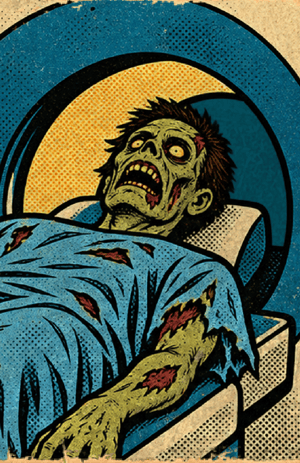
CT Scans of the Dead

To help determine the cause of death when the local Medical Examiner’s (ME’s) office was severely backed up, hospital radiologists were requested to perform peri-mortem CT scans on recently deceased patients. Radiologists had never been asked to perform these imaging requests so they contacted ProAssurance Risk Management for advice. I discussed risks with them such as lack of medical necessity and HIPAA considerations involving a deceased patient. Did the hospital’s request carry the same legal weight as the local ME's? Though the ME may not need consent under federal or state law to request medical records and additional testing related to a death determination, a hospital may not carry those same permissions. The group raised questions about where and how best to document radiology services in a hospital chart after death. Training was also an issue. Post-mortem scans and interpretation differ from imaging done on a living body because of changes occurring after death, and accurate interpretation requires special training. It was also prudent to be aware of billing obstacles for radiology performed on a dead patient to avoid inadvertent fraudulent billing or accepting money that had been contractually bound for the ME.

JenniferFreedenwTITLEupdate


WebBannersOct26-5

A Bloody Vital Service

While blood banks are essential to healthcare, they fall outside ProAssurance’s underwriting appetite. But in the spirit of Halloween, we’re taking a look behind the scenes at these often-unseen operations and the important role they play in patient care.

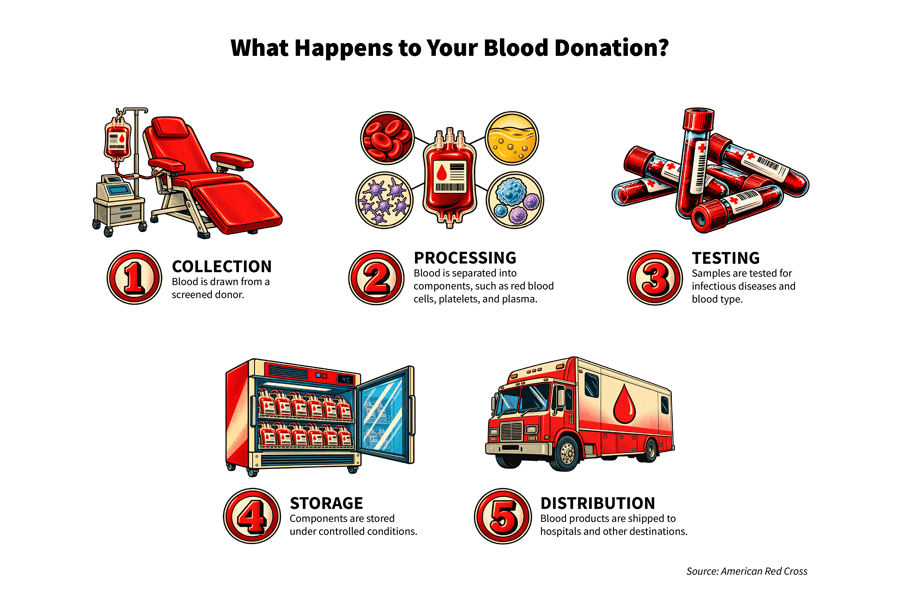
Blood banks collect, test, process, store, and distribute blood and blood products that hospitals rely on every day, from trauma care to cancer treatment. Much of this work happens out of sight, but it is critical to maintaining a safe and reliable blood supply.

Planning is an important part of that mission. Blood banks must anticipate demand, prepare for emergencies, and account for seasonal declines in donations to help ensure blood products are available when patients need them most. Disasters and other unexpected events can quickly increase demand, making supply management and coordination with healthcare facilities especially important.

These operations also involve distinct liability considerations. Potential exposures can arise at every stage, from donor screening and collection to testing, processing, storage, and distribution. Contamination, improper handling, labeling errors, or inadequate storage conditions can compromise the safety or integrity of blood products, with potentially serious consequences for recipients. Accurate recordkeeping, quality control, and reliable tracking systems are important safeguards throughout the process.

Although blood banks are not a fit for our underwriting appetite, understanding their operations helps illustrate the range of specialized risks within the healthcare landscape. 
BloodDonationGraphic


WebBannersOct26-6

A Frightfully Fine Line: Cosmetic Treatments and Coverage

This Halloween, we’re unmasking an area that often raises questions: cosmetic services, and where they do and don’t fit.

We will write outpatient medical clinics where a small share of services are cosmetic in nature, such as Botox injections, dermal fillers, and chemical peels. Think of it as a little touch-up, not a total transformation.

We do not, however, target medical spas as a class of business because, in our view, the market is underpricing the risk. A med spa typically combines the services of a day spa with the non-surgical cosmetic procedures of a medical clinic. Med spas operate under the supervision of a licensed healthcare provider, typically a physician, and their procedures penetrate living tissue below the skin’s surface to deliver long-lasting or permanent results. Common services include injectables, skin resurfacing and rejuvenation, body contouring, and laser hair removal. In other words, these treatments are more than skin deep.

A seasonal example: the “vampire facelift.” This popular treatment uses the client’s own blood. A provider draws a small sample, separates out the platelet-rich plasma, and applies it to the skin, often with microneedling, to promote rejuvenation. It’s a fitting example for the season, and a good reminder that med spa services are medical procedures, not just spa treatments.

Submissions involving even more invasive procedures such as liposuction or high-frequency laser treatments are an automatic decline due to the potential for severe losses and belong in a higher rating classification.

Have a submission or a question? We’re not afraid to talk it through. Reach out to MiscMedSubs@ProAssurance.com.

WebBannersOct26-7

The Quiet Hazard in Healthcare Transitions

People often don’t hear it coming, because they don’t know what it sounds like …

Each year in the U.S., about 30,000 healthcare facilities, ranging from private practices to large hospital networks, close, merge, or cease part of their operations. While the requirements for licensing and operating a healthcare business are strict and well defined, in many cases, shutting down a healthcare facility is challenging, because the same playbook doesn’t exist for closure. As a result, useful information about healthcare facility closure requirements is often vague, incorrect, or absent. Closure requirements that are published vary widely from state to state, and they often conflict with other federal or regulatory statutes.

One of the scariest and often misunderstood topics that surfaces when closing a healthcare business is what to do with the medical records. Aside from ensuring patient care, facility ownership could suffer lost revenue from audits/clawbacks/liability risk and face fines for choosing a solution that does not properly navigate the graveyard of records left after the facility closes.

Perhaps the most frightening mistake in choosing a solution for managing medical records when closing a healthcare facility is failing to understand what, if anything, patients can be charged for obtaining copies of their medical records. Every state publishes their own schedules for payment requirements, but checking only your state standard ignores the “monster” (HIPAA) lurking at the federal level.

HIPAA has several clear laws pertaining to what patients may be charged for records, but the U.S. Department of Health & Human Services (HHS) does little to promote education on these laws to healthcare facility owners. Their focus is more on enforcement and penalizing those who run afoul of the laws. Instead of letting this invisible ghost sneak up on you, let’s shine a light on some specifics to expose it.

First, HIPAA allows facilities to charge patients (or their representative) up to $6.50, with no questions asked, to obtain a copy of their medical records. Note that this $6.50 federal figure is less than just about every state published fee schedule. Notice the federal law doesn’t “cap” the fee at $6.50, but here’s where most people start to go batty. HIPAA states that any fees charged above $6.50 can only be added to recover measurable and reasonable costs required to fulfill the record request. This does not give providers or their business associates (like records custodians, copy services, or fulfillment agents) free rein to declare anything a “cost” that can be tacked on top of the $6.50. A few significant examples of those who ran into this include a landmark class-action suit in 2019, followed by several similar cases involving an outsourced medical records fulfillment agent. That agent charged patients and third parties more than the $6.50 limit but couldn’t justify the additional cost, resulting in millions of dollars in fines.

Over the last several years, these legal actions have prompted HHS to clarify exactly who can be charged and at what amounts, and to uphold the tightest restrictions for protecting patient access to records for continuity of care. HIPAA also shields outside vendors (business associates, in HIPAA parlance) from the risk of fines while diverting the risk back to the healthcare facility owners. A records management vendor telling you not to worry (when it’s no skin off the vendor’s nose) should send you running away screaming. Look at the text from this HHS webpage at the bottom of the section, and consider how “buried” this key info is, especially for something so important.

The scariest example can be found in a Transylvania—sorry—a Pennsylvania hospital that closed and chose a records custodian in 2025. Despite the clear laws restricting what patients could be charged, the custodian attempted to charge patients over $45, exposing the hospital ownership to public backlash and the risk of serious fines. This decision cost the closed hospital ownership almost $3 million to correct, as that penalty ultimately was far less than the fines would have been, if left uncorrected.

Before trusting an outside vendor about the risks that you, the provider, might incur for patients being charged for medical records, it’s worth taking a look at the HHS website, which posts examples of their “settlements,” including those in which vendors were only charging a flat fee of $15-$20 for record copies. After patient complaints to HHS, even those costs could not be justified as reasonable, leading to steep fines for the provider but not their contractors. Don’t make this costly mistake.

BrianField_HEADSHOT

Brian Field
Exectuive Vice President, Cariend, LLC

Brian has been in the custodial records business since 2009, helping thousands of healthcare facility owners navigate proper handling of medical records through business transitions such as closure, acquisition, and bankruptcy. As a business dedicated solely to custodial records solutions, Cariend enables healthcare facility owners to walk away from the records after a transition of the business, ensuring continuing patient care, cost certainty, and compliance.


WebBannersOct26-8

If You Can Survive a Zombie Apocalypse You Can Handle Anything

"And now for something completely different!"

While a zombie apocalypse may not rank high on most healthcare organizations' risk registers, this fictional scenario can provide a surprisingly effective way to test emergency preparedness, communication, and continuity planning. Drills, simulations, and tabletop exercises can highlight knowledge deficits or gaps in expected response against hordes of undead. They are useful for subsequent staff training on established protocols and identifying unique role-based responsibilities during emergencies.

Objective

To assess the healthcare practice’s ability to maintain patient safety, continuity of operations, regulatory compliance, and staff morale during a highly improbable, yet strangely familiar, zombie outbreak. 

Case Scenario: Zombie Apocalypse 

The office manager arrives to open the clinic and notices that several patients have gathered outside the front entrance. Nothing seems unusual except that a few of them are moving unusually slowly, appear pale, and are repeatedly bumping into a decorative ficus.

As staff begin arriving, one medical assistant comments that the scene looks suspiciously similar to The Walking Dead. Another notes that it feels more like 28 Days Later, while a younger employee insists everyone should remain calm because they have watched all episodes of The Last of Us.

At 8:15 a.m., a patient enters the lobby and repeatedly states:

“Braaaaaains ...”

The patient then attempts to bite the receptionist.

Simultaneously:

  • The EHR goes offline.
  • Social media reports indicate similar incidents throughout the city.
  • Local news advises citizens to shelter in place.
  • A physician announces that he has a “foolproof plan” based entirely on watching World War Z six times.
  • Two employees attempt to leave immediately.
  • One employee begins constructing improvised weapons from tongue depressors and otoscope covers.
  • Another employee says, “I’ve been preparing for this since Zombieland.”

Within 30 minutes:

  • The parking lot contains approximately 25 zombies.
  • Patients are still arriving for appointments.
  • Deliveries continue appearing at the front door.
  • Corporate leadership is unavailable because they are reportedly trapped on an elevator with a podiatry conference group.

How Would Your Office Respond?

Group Brainstorming

Suggested Discussion Questions

Initial Response

  • At what point does the office determine this is no longer a routine Monday?
  • Who assumes incident command?
  • Which staff member is responsible for verifying whether a zombie outbreak is actually occurring rather than relying solely on TikTok?
  • What immediate actions should be taken to protect patients and staff?
  • Which entrances and exits should be secured?

Patient Safety

  • How will the practice account for all patients currently in the office?
  • What should staff do with patients who cannot be safely discharged?
  • How would medications, oxygen-dependent patients, and urgent clinical needs be managed?
  • How will continuity of care be maintained if the healthcare system becomes a post-apocalyptic wasteland?

Communication

1. Who communicates with:

  • Emergency responders?
  • Public health officials?
  • Patients?
  • Families?
  • Corporate leadership (if still alive)?

2. What backup communication methods are available if:

  • Phones fail?
  • Internet service is unavailable?
  • The only remaining communication device is a teenager's gaming headset? 
3. What messages should be sent to scheduled patients?


Human Resources

  • How will staffing shortages be managed if portions of the workforce become zombies?
  • When should staff be instructed to shelter in place versus evacuate?
  • How should the office address an employee who insists, “I’ve seen every zombie movie ever made. I should be in charge."
  • How should disagreements between the “Walking Dead Strategy Team” and the “Last of Us Strategy Team” be resolved?

Supplies and Operations

  • What supplies would become critical during a prolonged outbreak?
  • How long could the office function if deliveries ceased?
  • What backup power options exist?
  • Which office supplies unexpectedly become valuable?
  • Should clipboards be categorized as administrative tools or defensive tools?

Ethical Dilemmas

  • If a physician is bitten but insists he is “totally fine,” who makes the decision to remove him from patient care?
  • Should staff report to work if the zombie outbreak coincides with a scheduled PTO day?
  • Does an infected employee still qualify for the employee wellness program?
  • Is it appropriate to document “undead” in the problem list?
Scenario Escalation Injects

The facilitator may introduce the following developments:

Plot Twist #1: The Wi-Fi returns briefly, allowing exactly one Google search before failing again. What does the team search for?

Plot Twist #2: A pharmaceutical representative arrives for a scheduled lunch-and-learn and is completely unaware of the apocalypse.

Plot Twist #3: The local emergency management agency requests volunteers with medical training. How will the office balance community needs with protection of staff and patients?

After-Exercise Debrief

Discuss:

  • What worked well?
  • What surprised participants?
  • What critical vulnerabilities were identified?
  • Which policies would still be useful during a zombie outbreak?
  • Which procedures would require revision?
  • Did anyone reveal an unsettling amount of zombie knowledge?
  • What are three immediate preparedness actions that would improve resilience for any emergency, zombie-related or otherwise?
Lessons Learned

While a zombie outbreak is an intentionally ridiculous scenario, many of the challenges mirror real emergencies and, who knows, it could help your staff approach this planning exercise in a nonconfrontational way and have some fun before tackling a scenario that’s more realistic for your practice:

  • Disaster response
  • Shelter-in-place decisions
  • Mass casualty events
  • Pandemic readiness
  • Communication failures
  • Supply chain disruption
  • Cyberattack-related downtime
  • Leadership succession planning

If your office can successfully survive the zombie apocalypse, it will probably handle a tornado, power outage, ransomware attack, or other real-world emergency much more effectively.

Additional Resources

To access additional resources, see the ProAssurance Risk Management Guidelines on medical emergencies and the Emergencies in the Medical Clinic "2 Minutes: What’s the Risk" video.

This content was prepared by humans with assistance from artificial intelligence. No zombies were consulted.

                                                  JenniferFreedenwTITLEupdateScottSpinolawTITLEupdate

WebBannersOct26-9

Don’t Let the Bed Bugs Bite

With this issue’s focus on medical horror stories, there seems no better time to discuss the nocturnal, blood-sucking parasites that elicit fear and panic in, well, just about anyone—bed bugs! Cimex lectularius, or common bed bugs, are small, flat, reddish-brown insects that feed on the blood of a host at night and hide in crevices of furniture, walls, and floors during the day. They do not fly and tend to remain within 8 feet of a blood source, but they can travel 100 feet in a single night. Although not known to spread disease, bed bug bites may cause skin rashes, itching, lost sleep, general psychological distress, and, rarely, allergic reactions.1

Medical offices are high-traffic public areas where bed bugs can stow away on patient and visitor clothing and personal items and transfer to waiting room seating, exam tables, or reusable patient-care equipment. Managing bed bugs in a medical practice office can be challenging, and a sensitive topic to discuss with patients.

OSHA’s General Duty Clause requires employers to furnish a workplace free from “recognized hazards … likely to cause death or serious physical harm.”2 While OSHA does not have a specific standard concerning bed bugs, standard 1910.141(a)(5) requires that workplaces are “constructed, equipped, and maintained, so far as reasonably practicable, as to prevent the entrance or harborage of rodents, insects, and other vermin.” Healthcare organizations should promptly address pest-related concerns, including instituting regular and effective extermination programs, to support a safe workplace for team members. When the setting is a healthcare facility, there is the additional responsibility of meeting the highest levels of environmental safety for patients, too. While bed bugs are an unsettling and disruptive problem, they also present important infection control and workplace safety challenges, which must be mitigated immediately as infestations can occur quickly.

Senior Risk Management Consultants Gerryann Whalen and Joanne Simmons share two examples of bed bug exposure in healthcare settings: one in a physician office and one in a hospital. Both situations underscore the need to act promptly, protect patient dignity, continue necessary care, document objectively, and use a clear response process to reduce the risk of spread.

Office scenario: A medical practice contacted the Risk Helpline after treating a patient for a bed bug-related rash and later learning the patient had an active infestation at home. In another visit, staff believed they found a bed bug after the patient left the office. The practice was concerned about exposure to other patients and staff, patient privacy, and how to respond appropriately because no formal process was in place.

Risk Management recommendations for medical practices:

Patient Response

  • Continue necessary care and avoid delaying treatment solely because bed bugs may be involved.
  • Speak with the patient privately and respectfully to avoid embarrassment, stigma, or unnecessary disclosure.
  • Reassure the patient that bed bugs can occur in any setting and are not a reflection of personal hygiene.
  • Explain temporary precautions, such as limiting personal items into the medical office and placing belongings in a plastic bag during the visit.
  • Escort the patient directly to an exam room when appropriate to reduce their time in shared spaces.
  • Provide education on identifying bed bugs, reducing clutter, laundering bedding and clothing with high heat, avoiding movement of infested items, and contacting a qualified pest-management professional.
  • Confirm the patient understands the importance of treating the home environment to reduce continued exposure and spread.
  • Refer the patient to local resources when assistance is needed, such as a county health department, housing authority, landlord, or social service agency. In some states, landlords may have legal responsibilities related to infestation treatment, and some agencies may offer emergency assistance for eligible households.3

Practice Response

  • Notify the designated manager, infection control contact, or other responsible person as soon as bed bugs are suspected.
  • Document the event objectively, including what was observed, where the bed bug(s) was found, actions taken, and patient education provided.
  • Inspect exposed areas and items including waiting room chairs, exam tables, wheelchairs, and shared equipment.
  • Close suspected or affected rooms until inspection and appropriate cleaning or treatment are completed.
  • Post clear “Do Not Enter” signage when an area is temporarily closed.
  • Use disposable PPE when staff must handle potentially contaminated belongings or high-risk items.
  • Contact a qualified pest-management company when confirmed or suspected infestation exceeds the practice’s ability to manage safely.
  • Train staff to recognize signs of bed bugs, report concerns promptly, protect patient privacy, and follow the response process.
  • Review the incident after it is resolved and update the practice’s policy or workflow to clarify who to notify, how to limit spread, and when to involve infection control or pest-management personnel.
  • Conduct follow-up inspections as recommended by pest-management professionals.

Hospital scenario: Bed bugs were identified on the clothing and belongings of a hospitalized patient. The case manager helped coordinate discharge planning to support a safe transition while the hospital addressed exposure concerns within the facility.

Risk Management recommendations for medical facilities:

  • Conduct follow-up inspections as recommended by pest-management professionals.
  • Review the hospital’s bed bug, environmental services, and infection prevention policies.
  • Notify Infection Prevention and Control immediately so the response can be coordinated through the appropriate departments.
  • Coordinate next steps with Environmental Services, Facilities, nursing leadership, and qualified pest-management personnel.
  • Involve Employee Health, Case Management, or Social Work when staff exposure, discharge planning, housing concerns, or patient support needs are identified.
  • Continue medically necessary care while using reasonable precautions to protect staff, patients, and visitors.
  • Place the patient in a private room when feasible and consistent with hospital policy.
  • Contain the patient’s clothing and personal belongings according to infection prevention and environmental services procedures.
  • Document the event, actions taken, departments notified, patient education provided, and discharge-planning considerations.
  • Plan discharge carefully when housing, environmental safety, or support needs may affect the patient’s ability to return home safely.

Risk note: Refusing care or terminating a patient relationship because of bed bug exposure may raise patient abandonment or discrimination concerns. Healthcare organizations should continue necessary care while using reasonable precautions, objective documentation, patient education, and appropriate environmental controls to reduce exposure risk.

*Data from the ProAssurance Risk Management Helpline showed 12 bed bug or other pest-related calls from 2022 to 2026. Concerns varied from patients having bed bugs to finding the bugs in the home, and the appropriate practice protocols for handling infestations. It was asked whether telehealth was recommended over live appointments, if a practice should dismiss a patient if their home was thought to be infested (advised against), and whether to terminate patients who were noncompliant with treatment.

References 1. CDC, About Bed Bugs, April 26, 2024, https://www.cdc.gov/bed-bugs/about/?utm_source=syndication
2. U.S. Department of Labor, Employment Law Guide, Safety and Health Standards: Occupational Safety and Health, Basic Provisions/Requirements, accessed 9/2/2026, https://webapps.dol.gov/elaws/elg/osha.htm
3. United States Environmental Protection Agency, Local Resources for Bed Bug Assistance, accessed 9/3/2026, https://www.epa.gov/bedbugs/local-resources-bed-bug-assistance
                         GerryannWhalen_wTITLE_UPDATE 1JoanneSimmons_wTITLE_UPDATEKaelinOReillywTitleUpdate


NewsUpdates_TDC
P&C Industry's Best Half in Years Hides a Casualty Problem

The U.S. property and casualty industry nearly tripled its net underwriting income in the first half of 2026. The result reflects a market where property and casualty lines are moving in sharply different directions. Net underwriting income reached $31.2 billion in the first six months of 2026, up from $10.9 billion in the same period last year, according to a new AM Best report. The industry's combined ratio improved four points to 92.5. Catastrophe losses contributed 6.2 points to that ratio, down from 10.8 points in the first half of 2025 when the California wildfires hit. (Insurance Business Magazine)  

Read more →

Clinician Shortage to Double By 2040

The U.S. healthcare system finds itself on the brink of a workforce crisis, with a new report predicting the national clinician shortage will nearly double by 2040. But it’s not too late to stem the shortage, according to an analysis from Covista, a healthcare education company. With the right mitigation strategies, such as workforce investment and using AI to drive administrative efficiency, the healthcare industry can close 92% of the projected workforce gap. (Healthcare Dive) 

Read more →

Hospital Consolidation in All 50 States, By the Numbers

The analysis covers general short-term acute care hospitals in each state and Washington, D.C. Each hospital’s market is defined as a 30-minute travel radius, and concentration is measured using the Herfindahl-Hirschman Index, which ranges from near 0 in highly competitive markets to 10,000 for a monopoly. Federal antitrust regulators consider markets above 1,800 “highly concentrated.” The lab notes that its measure is an analytical proxy, not a legally defined antitrust market, and that figures for 2024 to 2026 are preliminary. (Becker’s Hospital Review)

Read more →

Waning Risks, Higher Stakes: Medscape Physicians and Malpractice Report 2026

One-third of all U.S. physicians have been a sole- or co-defendant in a malpractice lawsuit, according to Medscape's latest survey of physicians across more than 29 specialties. But you might not always know it.

Compared to past Medscape reports, doctors reported a bit less stress over suits and a lower likelihood of being involved in multiple cases. Potential increases in so-called "nuclear verdicts" and insurance rates, however, may offset any good vibes. (Medscape)  

Read more →

Data Privacy Concerns Could Hold Patients Back from Using AI

Healthcare consumers are primarily concerned about data privacy and the accuracy of AI-generated information, with around 89% saying AI responses in healthcare need human oversight, the survey by Wolters Kluwer shows. This trust gap means that less than a third of U.S. adults are using AI to find a healthcare provider, navigate their health insurance or create a diet plan, even though these applications are frequently marketed as key uses for AI in healthcare. (Healthcare Dive)

Read more →

The 20 Most Expensive Conditions Hospitals Treat: Report

The report, published February 2026, used 2022 data from the Agency for Healthcare Research and Quality’s Healthcare Cost and Utilization Project on hospital costs of inpatient stays in nonfederal acute care hospitals. Using the 2022 HCUP National Inpatient Sample, the report found the distribution of costs by primary expected payer and the conditions that accounted for the largest percentage of payer’s hospital costs. Hospital charges were converted to costs using HCUP cost-to-charge ratios. Payers included Medicare, Medicaid, private insurance and self-pay/no charge. (Becker’s Hospital Review)  

Read more →

10 Fastest-Growing Healthcare Jobs, Ranked

Nurse practitioner is projected to be the fastest-growing occupation in the U.S. economy over the next decade, and it leads a healthcare field that will account for 37% of all new American jobs through 2035, according to Bureau of Labor Statistics projections released Aug. 27. Nineteen of the 30 fastest-growing occupations economywide are healthcare or health-related. Total U.S. employment is projected to grow 3.5% over the decade. (Becker’s Hospital Review)  

Read more →

RMUpdates_TDC

Risk Management Updates

October Claims Rx

In-Office Procedures: Risk, Routine, and Complacency 
In the ambulatory care setting, outpatient procedures considered routine still carry inherent risks with the potential for severe injury. As serious complications from these “everyday” procedures are rare, medical professionals and support staff may become more relaxed about following protocols and best practices.


READ MORE

Keep Up-to-Date on All Our Risk Management Resources

Our weekly risk management newsletter features the latest releases from ProAssurance’s Risk Management department—as well as highlights from our expansive online library of tools and publications. Join our email list.

ProVisions Team

Emily Kelly-Gillingham
Emily Kelly-Gillingham Communications & Digital Marketing Director
Headshot_KristenProVWeb
Kristen Hensley Communications Supervisor
ScottSpinola
Scott Spinola Senior Communications Coordinator
Kaelin O'Reilly
Kaelin O'Reilly Senior Communications Specialist
EricaHess 1
Erica Hess Manager, Creative Services
Kat McPeak
Kat McPeak Senior Creative Services Coordinator
ErikSeelman 1
Erik Seelman Senior Graphic Design Specialist
AndrewSegura
Andrew Segura Digital Marketing Supervisor
BethUlle
Bethany Ulle Senior Digital Marketing Specialist
Oct26ProVFooter_Final