









September 2026
A Higher Standard:
States Leading in Tort Law
Table of Contents


The Doctors Company, the nation’s largest physician-owned medical malpractice insurer, announced that it has completed the acquisition of ProAssurance, a specialty insurer with broad expertise in medical liability, products liability for medical technology and life sciences companies, and workers’ compensation insurance.
Read more.
The State-by-State Standouts
How do you pick the best state in the United States? Such a question can be fun—perhaps pointing at a great regional food or staying loyal to your alma mater. But when it comes to business, there’s a bit more nuance.
In MPL, state rankings often come down to claims. Items like strong tort reform, venues that tend toward impartial juries, or reasonable damage caps can make all the difference when providing malpractice defense. Ultimately this can also mean less expensive medical liability policies as well.
While there is no perfect venue, there are certainly states that score above the rest when it comes to the essentials of MPL. We took the time to consider what makes for a favorable state and asked our teams to name what they consider the best of the best. We have also compiled information on areas where litigation may have a significant impact on the MPL environment.
Our regional approach allows us to focus our teams’ expertise at both the national and state levels. If you ever have questions, or need resources on a particular state or topic that would be useful to you, please do not hesitate to reach out to your underwriter or Business Development representative.
Setting the Standard
Meet the states that rise to the top across the MPL tort-law landscape.
When it comes to venue selection, what “top states” dominate in managing tort-related issues? We assembled a panel to discuss the “ideal model” for MPL state tort law. Our team gave us their favorite states in pre-selected categories like damage caps, collateral source rules, statutes of limitations, and more to draw a picture of our market—and where opportunities for success may lie.
Meet Our Panel

![]() |
Mallory Earley, JD, CPHRM |
![]() |
Bradley E. Byrne Jr., JD, CPHRM |
![]() |
Barbara Hunyady, JD, CPHRM |
![]() |
Mary-Lynn Ryan, JD, CPHRM |
![]() |
Katie Theodorakis, JD |
Our Rankings

An affidavit or certificate of merit is a document from a medical expert that states a malpractice claim has validity and can move forward in the judicial system. Twenty-eight states have some sort of requirement for an affidavit or certificate to be filed prior to a case going to court. Thirty-three states also have specific requirements regarding who can testify as a medical expert during a malpractice case. (National Conference of State Legislatures)
Who do we love?
Texas
Why do we love them?
There is a mandatory dismissal and possible paying of attorney fees if the requirements are not met. – Mallory Earley
Texas requires an early export report, which makes it a strong overall merit-screening process. – Katie Theodorakis
Others to Consider
California. In my opinion, California is a leader in tort reform. Medical Injury Compensation Reform Act (MICRA) has been around for a long time relative to tort reform, which has given the state time to test the process. – Mary-Lynn Ryan
Georgia. Georgia requires an expert affidavit to be filed concurrently with the initial complaint. – Brad Byrne
Michigan. The affidavit must be signed by the medical expert, not the attorney, thus disclosing the name of the expert early in the case, and the expert must match the specialty. Failure to file an affidavit of merit does not toll the statute of limitations, thus creating a procedural trap in the event the plaintiff does not timely locate a proper expert. – Barbara Hunyady
The collateral source rule in tort law prohibits evidence that would show the plaintiff or victim received some sort of compensation outside of the damages they are seeking against the defendant. This helps to ensure that any damages awarded to the plaintiff are not reduced by the amount recovered from another third party related to the case. (Cornell Legal Information Institute)
Who do we love?
California
Why do we love them?
California allows medical malpractice defendants to introduce evidence of collateral benefits received by the plaintiff and limits recovery of medical expenses to amounts actually paid or incurred, rather than larger billed amounts that were written off by providers. – Katie Theodorakis
MICRA is strong and includes collateral source rule elements. – Mary-Lynn Ryan
California has a strong malpractice statute that allows defendants in malpractice cases to provide evidence of collateral benefits like health insurance, disability benefits, or workers’ compensation. – Mallory Earley
MICRA allows evidence of actual medical payments made on behalf of the plaintiff during trial, which can help anchor more realistic damage amounts. – Barbara Hunyady
Another to Consider
Alabama defendants are allowed to introduce full evidence of any medical reimbursement received by the plaintiff. – Brad Byrne
Generally speaking, there are three types of damage caps. Economic or special damages involve a specific amount that must be paid, such as a medical bill related to the tort. Noneconomic or general damages are subjective payments to the plaintiff; “pain and suffering” is a common example of general damages. Punitive damages are designed specifically to punish the defendant for severe wrongdoing. Most states have some sort of cap on damages as it relates to tort law, or malpractice specifically, which helps to keep litigation costs at a reasonable level. (Justia)
Who do we love?
Texas
Why do we love them?
Typically, the cap is $250,000 for each physician and an aggregate of noneconomic damages at $750,000. – Mallory Earley
Their cap on noneconomic damages was set via a state constitutional amendment and is thus protected from being overturned. – Brad Byrne
Others to Consider
California medicine has been fighting off attacks to the damages cap for years. When you think about how successful it’s been at keeping things at a relatively low amount of $250,000, which was set in the ’70s, until just recently, it is pretty amazing. Even now, with the caps increasing incrementally to $750,000, it seems reasonable considering inflation. – Mary-Lynn Ryan
The cap applies to both economic and noneconomic damages, plus there is a patient compensation fund. – Barbara Hunyady
Louisiana has a cap on total malpractice damages (not just noneconomic damages), excluding future medical care, which is handled separately through the state’s patient compensation fund. – Katie Theodorakis
There are two common forms of judgment interest. Prejudgment interest is interest paid to a creditor (in malpractice cases, typically the plaintiff) for an injury that occurred prior to the judgment being rendered. Postjudgment interest is interest accrued from the time the judgment enters the clerk’s record to the time when the judgment is paid. While there are federal guidelines for judgment interest, the amount accrued also varies by state.
Who do we love?
Michigan
Why do we love them?
Michigan has the lowest rate at 4.959 percent for significant civil judgments. Other states can stretch into the 8-12 percent range. – Mallory Earley
Michigan has its interest rate tied to a formula rather than a high fixed rate. – Katie Theodorakis
Another to Consider
Texas. The time period for prejudgment interest is limited, and the overall interest rate is tied to the Fed with a statutory floor and ceiling. – Brad Byrne
A peer review privilege policy helps to ensure the plaintiff and their legal team do not have access to peer review reports or discussions from the facility associated with the defendant. There is some sort of confidentiality protection in all 50 states plus the District of Columbia to help ensure physicians’ evaluation of their peers remains private. (U.S. Legal Forms)
Who do we love?
Arizona. In Arizona, all proceedings, records, and materials prepared with qualifying hospital or outpatient surgical center peer review are confidential. Typically, peer review participants cannot be subpoenaed for activities related solely to peer review. – Mallory Earley
Georgia has a reputation for making anything related to peer review proceedings nearly impossible from a discovery standpoint. – Brad Byrne
Texas has statutes protecting peer review committee proceedings, communications, and records. – Katie Theodorakis
Like any tort, an allegation of malpractice needs to be brought forth in a timely fashion. Like most aspects of tort law, the statute of limitations for malpractice claims varies by state and the circumstances surrounding the allegations. (National Library of Medicine)
Who do we love?
Tennessee
Why do we love them?
Tennessee has a short, one-year statute of limitations, a three-year statute of repose, and a mandatory pre-suit notice requirement, making it very favorable. – Katie Theodorakis
For adults, the statute of limitations is one year from the date of injury or discovery. – Barbara Hunyady
Tennessee has a one-year statute of limitations and only a three-year statute of repose. – Mallory Earley
Others to Consider
Ohio. I think Ohio’s four-year statute of repose might make it the most defense-oriented statute of limitations scheme. – Mary-Lynn Ryan
Kentucky. They have a short, one-year statute of limitations. – Brad Byrne
Generally, “nuclear” verdicts are considered to be those with awards over $10 million. Once a rarity, these large awards are becoming increasingly commonplace—with nuclear verdicts jumping 40.7 percent in frequency across the property-casualty landscape in 2025. (Marathon Strategies)
Who do we love?
Alabama. I think you have to disregard certain states with low physician counts. Alabama has a solid number of healthcare professionals and has largely avoided nuclear verdicts—even if that trend is starting to change a little bit. – Brad Byrne
Louisiana has a cap on total recoverable damages, not just noneconomic, at $500,000 excluding future medicals. They also have a patient compensation fund that pays for additional covered amounts. – Mallory Earley
Texas is a good state in avoiding nuclear verdicts because it has relatively low noneconomic damages caps, early expert report requirements, broader tort reform measures, and historically low average malpractice payments compared to other states. – Katie Theodorakis
Malpractice cases that make it through the trial court may be eligible for an appeal; the losing party may have the opportunity to file an appeal. (National Library of Medicine) The parameters for examining the merit of an appeal vary by venue.
Who do we love?
Texas
Why do we love them?
Texas requires an early export report that makes it a strong overall merit-screening process. – Katie Theodorakis
There is an opportunity to obtain appellate review before trial instead of waiting for final judgment in Texas. – Mallory Earley
Others to Consider
Alabama. My only real experience is with Alabama on appeals. The Court of Civil Appeals has historically overturned large verdicts, and the appeals process is generally predictable. – Brad Byrne
California. I think the appellate judges in California are astute. – Mary-Lynn Ryan
Georgia Supreme Court Rules on Cap for Wrongful Death Claims
In 2005, the Georgia General Assembly enacted comprehensive tort reform measures including a $350,000 cap on noneconomic damages in medical malpractice actions. In 2010, the Georgia Supreme Court struck down the cap in Atlanta Oculoplastic Surgery P.C. vs. Nestlehutt—a personal injury medical malpractice case—holding that it could not constitutionally be applied to the jury’s award of noneconomic damages for pain and suffering. The cap’s application to noneconomic damages awarded in wrongful death medical malpractice actions remained unresolved.
The Georgia Supreme Court addressed that issue in June of this year.
In Clark vs. Leigh, a wrongful death medical malpractice action, the jury awarded substantial noneconomic damages. The award included almost $30 million under the wrongful death claim for the full value of the decedent’s life and $2.5 million for pre-death pain and suffering. The trial court reduced the “wrongful death full value of the decedent’s life” award to the $350,000 cap while leaving the remainder of the award untouched.
On appeal of Clark vs. Leigh, the Georgia Supreme Court vacated the trial court’s cap reduction on the wrongful death full value of the decedent’s life award. The court reasoned that the cap statute requires all noneconomic damages to be combined before the cap applies. Because the 2010 Nestlehutt decision precludes application of the cap to the estate’s pain and suffering damages, the statute could not operate as written on the combined judgment. As a result, noneconomic damages in cases involving both wrongful death and survivor pre-death pain and suffering claims are now uncapped.
While the ruling does not foreclose the possibility that the court may eventually uphold the constitutionality of the cap in a pure wrongful death action that does not include pre-death pain and suffering claim, it has significantly weakened the cap’s practical effect.
Defense counsel in Georgia report that the ruling is already affecting settlement values, as plaintiff counsel remain emboldened and are often unwilling to engage in reasonable settlement discussions based on the court’s June ruling.
The ruling should have no bearing on the Georgia tort reform legislation signed into law in April 2025.
Third-Party Litigation Funding, the Implications for Claims Severity, and Recent Legislation
How Third-Party Litigation Funding Works
Third-party litigation funding (TPLF) has moved from a niche financing tool to a significant driver of litigation strategy, claims severity, settlement timing, and legal system costs. Third-party litigation financing allows external investors, such as private equity firms, hedge funds, and institutional investors, to advance money to a party, generally a plaintiff, for the payment of lawsuit expenses. A plaintiff can then pursue litigation without bearing the cost upfront. In return, the funder receives a portion of the settlement or judgment, a multiple of the amount funded, or interest on the amount loaned.
This type of external funding, where the financier has a vested interest in the outcome, can affect the defense of medical liability cases. External investors can be profit driven as they expect investments to produce returns, meaning the larger the settlement, the larger the return. Some TPLF agreements allow external funders to influence and even drive the litigation strategies utilized in the suit. This process can lead to prolonged proceedings, higher legal expenses, and larger settlement demands. In cases where settlement cannot be reached or is not appropriate, third-party litigation funding can push cases to trial where the probability of a nuclear verdict—a jury award exceeding $10 million—may be higher. This happens particularly in high-exposure cases. Conversely, without the financial backing of TPLF, plaintiffs may settle for lower amounts, which can contribute to a decrease in the frequency of nuclear verdicts.
Why Third-Party Litigation Funding Matters to Claims
For liability insurers, one of the most important concerns is not simply that litigation is financed, but that the funding relationship is often opaque. When funding is not disclosed, defense teams and claims professionals may be evaluating exposure, negotiation posture, and settlement strategy without knowing whether a third party has a financial interest that could affect plaintiff behavior. Further, prolonged litigations and delayed resolutions can impact loss development. What’s more, longer case durations, discovery disputes, expert testimonies, trial preparation, and appeals can effectively increase defense costs.
The Regulatory Environment
There is no single federal law that regulates or bans third-party litigation funding. However, the regulatory landscape surrounding TPLF is changing rapidly, with transparency, disclosure, and funder conduct restrictions likely to remain active issues through 2026. Several states have enacted or proposed legislation to ban or limit TPLF practices, increase funding transparency, and protect consumers from pricing tactics during litigation. TPLF legislation typically includes a requirement to disclose to the courts any funding arrangements, restrictions to limit funders’ control over litigation strategy or influence on settlement, and consumer protection to safeguard plaintiffs from being exploited or manipulated by the funding practices. Industry sources also report growing interest in model legislation and policy-level disclosure tools.
North Carolina recently became the first state to ban third-party litigation funding (TPLF) in civil proceedings. HB 315, titled the Prohibit Litigation Investments Act, bans external investors from financing lawsuits in exchange for repayment once the case has been resolved, subject to certain exclusions. The law took effect on June 22, 2026.
Kansas enacted SB 54 requiring disclosure of litigation funding agreements within 30 days of a legal action or execution of a funding agreement. The law mandates disclosure of all contracting parties and any foreign funders, particularly from countries of concern such as China, Iran, and Russia, to enhance transparency and national security protections.
Georgia has enacted SB 69, which prohibits* funders from influencing litigation strategy or taking the plaintiff’s entire recovery. The bill also requires disclosure of financing agreements to opposing parties.
Arizona, Colorado, Montana, and Oklahoma passed laws in 2025 to regulate TPLF. Arizona (SB 1215) and Montana (SB 511) specifically prevent foreign entities of concern from financing litigation. Colorado (HB25-1329) requires foreign financiers to provide information to the Attorney General, while Oklahoma (HB 2619) mandates disclosure of funding agreements upon request.
Indiana enacted HB 1160, which mandates disclosure of funding, prohibits funders from accessing proprietary data, and bans them from controlling lawsuits.
Louisiana passed SB 355 to limit foreign litigation funding, prevent funder manipulation, and ensure plaintiffs are aware of outside influences on their cases.
West Virginia expanded its existing consumer litigation finance laws with SB 850, extending protections to large-scale litigation funding and safeguarding both consumers and businesses.
Ohio recently banned foreign litigation funding with HB 105.
*Important caveat: The term “prohibition” can mean different things depending on the source. Some states prohibit or restrict consumer litigation funding but allow certain commercial litigation funding arrangements. Some states retain champerty statutes that may render specific funding agreements unenforceable without completely banning litigation finance. Several states that once had champerty restrictions have abolished or narrowed them through legislation or court decisions.
Reinsurance Association of America: Litigation Funding: https://www.reinsurance.org/RAA/RAA/Legal-Tools/Insurance-Risks-Database/Active/Litigation-Funding.aspx
Ohio Association of Civil Trial Attorneys (OACTA), “Litigation Funding: Tipping the Scales from Justice for Litigants to Profits for Investors,” (Maryan Alexander, Esq) https://oacta.memberclicks.net/assets/2025/Litigation%20Funding-%20Tipping%20the%20Scales%20from%20Justice%20%20for%20Litigants%20to%20Profits%20for%20Investors-Alexander.pdf
U.S. Chamber of Commerce Institute for Legal Reform, “A Uniform Federal Rule for Third-Party Litigation Funding Disclosure: It’s Time for Transparency,” March 23, 2026, https://instituteforlegalreform.com/blog/uniform-rule-for-tplf-disclosure/
ProAssurance, “North Carolina Is the First State to Ban Third-Party Litigation Funding,” (Lesley Lopez Viner, MS, CPHRM), June 2026, https://proassurance.com/knowledge-center/north-carolina-is-the-first-state-to-ban-third-party-litigation-funding


Risk Management Data Team Identifies Emerging Risk Trends and Practice Readiness Gaps
The Top 5 Helpline Topics in 2026
The Risk Management Helpline serves as a contact point for ProAssurance insureds who would like to discuss liability concerns and questions with a Risk Management consultant. Data collected based on helpline inquiries is also used to identify emerging risk trends and inform our educational resource offerings.
| Top 5 Helpline Advice Topics | 2026 Contacts | % of 2026 Contacts* (N=1236) |
|
Patient Dismissal |
122 | 9.9% |
| Practice Changes | 91 | 7.4% |
| HIPAA | 79 | 6.4% |
| Patient Behavior | 75 | 6.1% |
| Adverse Outcome | 67 | 5.4% |
*contacts may have more than one topic recorded
The top helpline topic was patient dismissal, comprising nearly 10% of contacts in 2026. Patient dismissal contacts became more common throughout 2025 and have maintained this trend in 2026. The rise of patient dismissal contacts along with those involving patient behavior since 2025 points to increasingly problematic patient interactions and complex issues prompting termination of physician-patient relationships.
For more information, see these resources for terminating a physician-patient relationship:
- Risk Management Guideline for Ending the Physician-Patient Relationship
- 2-Minutes: What's the Risk? Terminating Patient Relationships
Top 5 Annual Baseline Self-Assessment (ABSA) Gaps in Risk Management Knowledge
The Annual Baseline Self-Assessment (ABSA) is a brief survey that can be completed by a practice’s entire healthcare team. The survey includes 59 items that are organized into practice domains that are most susceptible to malpractice risk and could lead to patient harm or litigation. Survey results are reviewed by our Risk Management team so that focused educational opportunities can address identified gaps in knowledge (lower percentages indicate higher perceived lack of preparedness).
|
Top 5 ABSA Gaps by Category |
2026 Average Positive Response Rate* (N=2142) |
|
In Office Medical Emergency |
72.8% |
|
Staff Competency |
80.8% |
|
Safety Culture |
81.7% |
|
Electronic Communications Text Messaging |
83.3% |
|
Medical Services: Controlled Substances |
86.4% |
*Average positive response rate (PRR) is the average percentage of positive responses (typically strongly agree and agree) to a question or category.
In Office Medical Emergency, the practice domain with the largest knowledge gap, prompts survey participants on how well-trained staff are to respond to patient emergencies. The lower average positive response rate (PRR) of 72.8% indicates a perceived lack of preparedness for patient emergencies in medical offices such as responding to hostile or aggressive behavior, medical emergencies, and natural disasters. Historically, this category has been a distinct gap across all practice roles—physicians and administrative staff alike.
The Electronic Communications Text Messaging practice domain was introduced in the 2025 version of the ABSA to address the growing frequency of text communications between providers and patients. The lower average PRR of 83.3% in this category indicates gaps in practice knowledge on texting policies and documentation in medical records.
For more information, see our Risk Management Guidelines.
Top 5 Risk Management Video Seminars and Claims Rx Articles
The online Physician Seminars and the bi-monthly Claims Rx e-publication provide patient safety and risk reducing strategies to our insureds through case-based claim studies. ProAssurance insureds may also use their completion of these online courses to earn continuing medical education (CME) credits. The educational topics are often derived from the data received through monitoring the Risk Management Helpline and the Annual Baseline Self-Assessment (ABSA) completions.
|
Top 5 Risk Management Video Seminars* |
2025 to July 2026 Completions |
% of Seminars Completed* (n=6,201) |
|
Social Determinants of Health: Increasing Awareness |
828 |
13.4% |
|
Medical Error: A Defense Attorney’s Perspective on Disclosure |
707 |
11.4% |
|
Documentation: Your Best Defense or Worst Liability |
551 |
8.9% |
|
Mastering De-Escalation in Healthcare: From Recognition to Resolution |
523 |
8.4% |
|
Healing the Healers: Litigation Stress Support for Physicians |
518 |
8.4% |
*Excluding Loss Prevention and Practice Administrator Seminars
For more information, see our Physician Online Seminars.
|
Top 5 Articles of the Claims Rx e-publication |
2025 to Jul 2026 Claims Rx Completed |
% of Claims Rx Completions (n=5,534) |
|
Claims Rx, October 2024 – Is it Safe to Send that Text? The Patient Safety and Liability Risks Associated with Text Messaging |
464 |
8.4% |
|
Claims Rx, February 2025 – Non-FDA-Approved Use of Medical Products: Pitfalls to Avoid |
395 |
7.1% |
|
Claims Rx, November 2024 – Unexpected Outcomes: Investigate, Communicate, Document |
342 |
6.2% |
|
Claims Rx, September 2025 – Spoliation of Evidence: Don’t “Spoil” a Good Defense |
255 |
4.6% |
|
Claims Rx, April 2025 – Smooth Transitions: The Importance of Handoffs for Continuity of Care |
302 |
5.5% |
The top five CME Seminars and Claims Rx courses completed since the beginning of 2025 through the end of July 2026 show that insureds have recently been most interested in topics related to responding to adverse outcomes, defending against allegations of malpractice, responding to in-office emergencies such as workplace violence, as well as improving communication between healthcare providers and with patients.


Focusing on Scope and Scale
Total MPL premium volume in a state can vary significantly, and is driven by a variety of factors—prevalence of healthcare systems, the number of healthcare employees, state population density, and more.
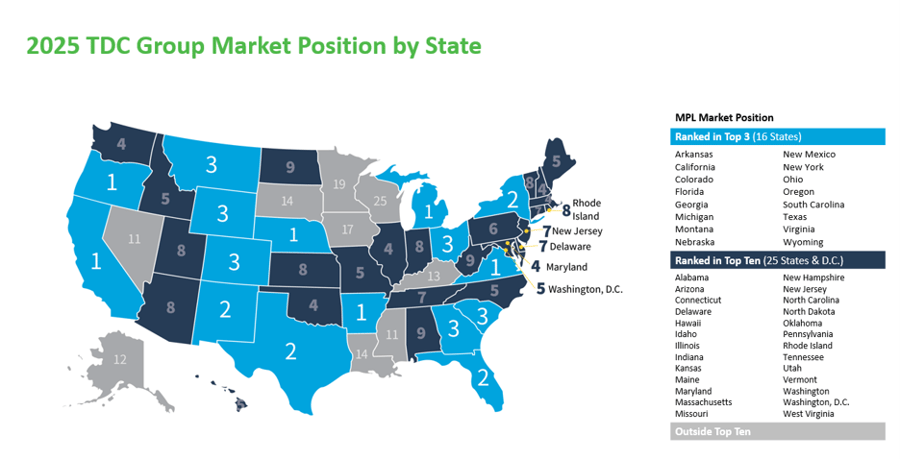
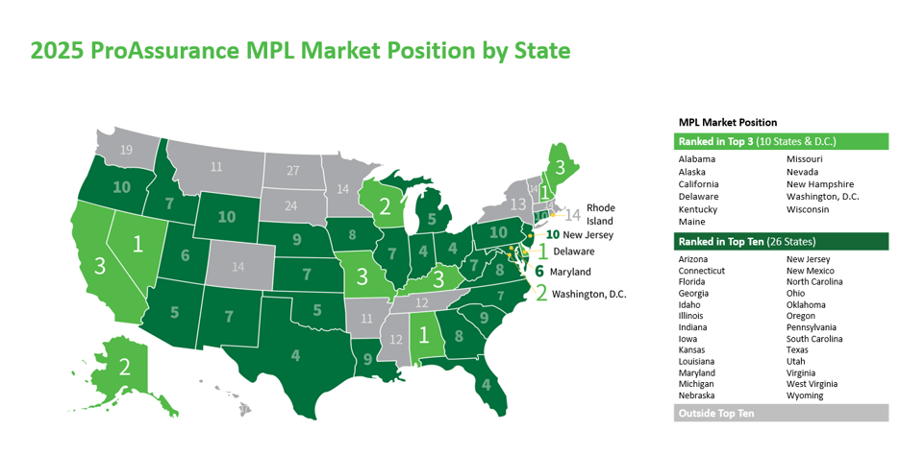
ProAssurance and The Doctors Company are top five writers of MPL insurance nationwide, with a significant presence in all 50 states plus the District of Columbia.
Top states by market share (year-end 2025)
|
1. New York 2. California 3. Florida 4. Pennsylvania 5. Illinois |
6. New Jersey 7. Texas 8. Georgia 9. Massachusetts 10. Maryland |


To assist doctors in choosing where to practice, WalletHub compared all 50 states and the District of Columbia using 19 key metrics. These factors range from physicians’ average annual wages to hospitals per capita and the quality of each state’s public hospital system. (WalletHub)
Few factors bear as heavily on the well-being of any state’s citizens as their overall quality of health. In evaluating the Best States for healthcare, access to preventive medical and dental treatment for children and adults alike is a key consideration.
Hawaii is the top state for healthcare. It’s followed by Massachusetts, Connecticut, Rhode Island, and Maryland to round out the top five. (U.S. News & World Report)
Rochester, Minnesota, ranks as the top U.S. metro area for healthcare access, according to data Indeed shared with Becker’s from its Best Cities for Work 2026 index.
The ranking reflects a single metric—primary care physicians per 100,000 residents—that sits within the index’s Job Quality & Security pillar, Indeed said in a statement shared with Becker’s. That pillar carries a 15 percent weight in the overall index and contains seven metrics, according to the methodology. Healthcare is not a standalone pillar. (Becker’s Hospital Review)
Because conditions vary widely by location, WalletHub analyzed the 50 states and the District of Columbia using 33 key indicators related to the cost and quality of and access to children’s health care. The data set includes measures ranging from the percentage of children ages 0 to 17 in excellent or very good health to the number of pediatricians and family doctors per capita. (WalletHub)
The analysis is based on U.S. Census Bureau state population estimates as of July 1, 2024, and active registered nurse and practical nurse license counts from the National Council of State Boards of Nursing database. The number of nurses per 100 residents was calculated by dividing the total number of active licenses in each state by its population and multiplying by 100. In California, the total reflects RN and vocational nurse licenses, rather than PN. (Becker’s Hospital Review)
WalletHub took stock of the nursing industry to help nurses, particularly new graduates, pick the best place to live. They did so by comparing the 50 states across 20 key metrics ranging from job openings for nurses per capita and average salaries to mandatory overtime restrictions and the quality of nursing homes. (WalletHub)
The Kaiser Foundation used the AHA Annual Survey to determine the prevalence of government managed, for-profit, and nonprofit hospitals in each state. This showcases both the availability of hospital care in each state as well as the overall prevalence of different payment structures around the country. Data reflects year-end 2024 figures (the most recent available). (KFF)

When the Surgery Succeeds and the Patient Dies
This issue of ProVisions discusses rankings. The top states for tort reform. The top states where physicians are best compensated. The top states with the highest lawsuit rates. Those numbers are real, and they matter.
But they didn’t matter in that operating room.
A Calm Surgeon. A Routine Case.
I was three years into my career as an orthopedic sales rep when I got a call from Dr. F, a neurosurgeon who needed a spinal fixation set for a trauma patient. I stopped by his office the day before the surgery to show him what I was bringing.
Dr. F was calm, almost unnervingly so. He glanced at the implant set and said, more or less, It’s going to be a straightforward case. A 21-year-old woman fractured several lumbar vertebrae in an ATV accident. She’s paralyzed. The goal is to stabilize her spine so she can sit upright and be rehabbed.
He wasn’t worried. This is what surgeons do. They train for years to stay calm when it matters most.
The surgery seemed to go perfectly. After about three hours, the surgeon began closing. The spine was stabilized. The surgical goal was achieved.
Then the nurse anesthetist started behaving frantically. “Get me an anesthesiologist. Get the patient on her back. Now.”
The anesthesiologist entered, assessed the patient, and said two words: She’s coding. A crash cart arrived. Four or five people rushed in. Realizing I was only in the way at this point, I left the room. A half hour later, everyone else slowly filed out of the room. The patient had died. She was 21 years old. The surgery was a success. She didn't survive it.
The Aftermath
About three and a half years later, I was subpoenaed to a deposition. The attorneys asked me questions I couldn’t answer. Was there excessive bleeding? Were the surgeon’s actions appropriate? Did the surgeon ever appear to lose control?
I was a sales rep. It was over three years ago. I had no useful answers.
What I did remember was how calm Dr. F had been. He was confident. Methodical. The doctors and nurses exiting the room after the code were visibly shaken, and they all said the same thing: The case went perfectly. There were no warning signs until the patient crashed.
And yet there was a lawsuit.
Where the Statistics No Longer Matter
This is the part of the story that should matter most to every MPL agent reading this issue.
Your physician clients might look at the statistics. Some will feel reassured because they practice in a tort-reform state. Some will feel exposed because they practice in a high-litigation state. Both reactions miss the point.
Dr. F didn’t lose a patient because of the legal climate in his state. He lost a patient because a 21-year-old who survived an ATV accident didn't survive the surgery meant to give her a life. The complication that took her life didn’t know what state it was in.
The rankings in this issue describe probability across populations. They say nothing about the next patient on your client’s schedule, or the next case that goes perfectly until it doesn’t.
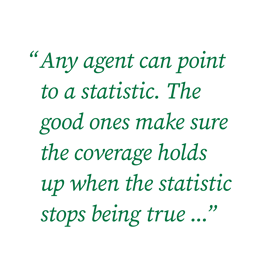
Any agent can point to a statistic. The good ones make sure the coverage holds up when the statistic stops being true—for that doctor, on that day, in that operating room or clinic.
This issue is about liability statistics. Read them. Use them. Just remember that none of them matter when the crash cart shows up.

|
Written by Mace Horoff of Medical Sales Performance. Mace Horoff is a representative of Sales Pilot. He helps sales teams and individual representatives who sell medical devices, pharmaceuticals, biotechnology, healthcare services, and other healthcare-related products to sell more and earn more by employing a specialized healthcare system. Have a topic you’d like to see covered? Email your suggestions to AskMarketing@ProAssurance.com. |

Risk Management Updates
Rapid Risk Review Podcast
The Doctors Company CEO Richard Anderson, MD, FACP, on Navigating Modern Healthcare Liability
In this episode, Richard Anderson, MD, FACP, discusses the strategic merger of The Doctors Company and ProAssurance, the impact of healthcare consolidation, the challenges of social inflation and nuclear verdicts, and the evolving role of artificial intelligence in medicine. His insights shed light on how these trends influence medical practice, insurance, and legal landscapes.


A 37 YO patient underwent a laparoscopic cholecystectomy at an ambulatory surgical center. The surgery was uneventful; however, while awakening from anesthesia and being transferred to the stretcher, the patient unexpectedly rolled off the operating table and was caught by several staff members.
Read more

While we are all susceptible to cognitive bias, we can reduce the risk of its negative impact on our decision-making.
Read the issue

This episode explores the challenges and opportunities within the mental healthcare system.
Listen nowKeep Up-to-Date on All Our Risk Management Resources
Our weekly risk management newsletter features the latest releases from ProAssurance’s Risk Management department—as well as highlights from our expansive online library of tools and publications. Join our email list.
ProVisions Team
- Communications
- Design
- Digital Marketing